For me, psychological theories of learning are tools, ways of looking at how children learn, so that I can find effective ways of allowing that learning to happen. All children are different, in the ways they behave, learn and think, and children think differently to adults. They haven’t learned how to think like an adult yet. I often joke about psychology being “the science of making the bleeding obvious as complicated as possible”, but putting the complicated language used aside, being able to view learning from a number of different perspectives is helpful because it allows me to look at the problem of facilitating learning from a number of different angles and attempt to find the ones which work for a particular child.
Here I am going to attempt to explain some of the theories of learning and development which are relevant to forest school. I don’t want to confuse the reader with complicated language to show how clever I am (coz I ain’t), but rather to attempt to keep it simple. I’m going to start with a couple of the most influential theorists, who were the pioneers of developmental psychology.
 Jean Piaget (1896-1980)
Before Piaget, people believed that children were just not very skilled at thinking, less skilled than adults. Piaget showed that children think in ways which are remarkably different to adults, that children’s brains are developing towards the stage where they can reason and use hypotheses in their thinking. He gave us the idea of cognitive development where children’s thinking changes as they learn more and find that their previous thinking is challenged by new experiences.
His theories break down into three main areas;
Schemas
These are the ‘building blocks’ of knowledge. They tend to show up as urges which children have, like when a baby constantly throws things on the floor for an adult to pick up, or a little child spends ages in the garden spinning around, or a child collects things in a basket and carries them around with them. Children are using these schemas to make sense of their universe, and as they do so, they are building up the connections in their brains that enable them to think. They need to work through these behaviours to cement their brain connections in order to move on. People who do not understand schemas, and how young children think differently may find them irritating or frustrating and try to stop the child from doing them. The best thing to do is to encourage and allow the child to explore them fully by providing them with suitable experiences and resources until they can then move on.
Below are some examples of schemas, and how we could facilitate them within the forest school setting.
[table id=10 /]
Adaptation (equilibrium, assimilation and accommodation)
This is the process where a child’s understanding of a schema is challenged by new experiences or information. Their equilibrium is upset by this new information and in order to gain equilibrium again they have to assimilate the new information and fit it into their understanding by accommodating it into a new more advanced version of their schema. When you see a child repeating something over and over again this is what they are doing, they are working out how all the information can fit into their understanding of their universe as they see it.
Stages of Development (sensorimotor, preoperational, concrete operational, formal operational)
Piaget described cognitive development as taking place in four distinct stages, and suggested ages at which these tend to happen, although further research has suggested that quite a few people never reach his formal operational stage.
Sensorimotor stage (up to about age 2 years)
This is where young children are making sense of their surroundings through the use of their senses and through movement. They are only concerned with themselves and their own point of view (highly egocentric) and they mostly learn through trial and error. Towards the end of this stage children can achieve what is described as object permanence which means that they know that an object still exists even though it is out of sight (when they know that a toy is hidden under a blanket).
Preoperational stage (from about 2 – 7 years)
Children at this stages thoughts are generally still about themselves (egocentric), they find it difficult to see things from another persons point of view and assume that everybody else sees, hears and feels just like they do. They may also believe that inanimate objects see, hear and feel like they do too (animism). They tend to be only able to focus on one aspect of a problem at a time, like counting the same number of big block and small blocks but saying there are more big blocks. Towards the end of this stage they start to understand conservation – the conservation of mass, volume or number. (i.e. pouring water from one container to another may change its shape, but the amount of water remains the same)
Concrete operational stage (from about 7 – 11 years)
The child is now more sociocentric, recognising that others have different views which may be different to their own, but they may not be able to understand what others views are. They are able to look at a problem from a number of different perspectives and solve multiple parts of a problem at the same time and they can think logically, but only in a concrete way (from experience), they are unable to deduce abstract ideas using logic.
Formal operational stage (from around 11+)
This is where a person is able to think and make deductions in the abstract, to use principles in their mind rather than resorting to the use of diagrams or models. They can use deductive reasoning. John is taller then Fred, and Fred is shorter than Harry. Who is the tallest?
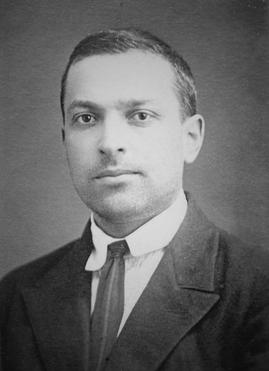
Lev Vygotsky (1896 – 1934 Published in the West in 1962)
Vygotsky, like Piaget, believed that children learn actively and develop their knowledge and thinking skills through hands on experiences, but he proposed a different process. His theory looks at the social and cultural interactions that a child is engaged in and says that they are what drive the child in gaining knowledge and intelligence. He didn’t believe in staged learning and development as Piaget did, but rather learning as an ongoing developmental process.
He placed an emphasis on language development because it is the main way in which adults provide children with information, and because he believed that language is needed to enable children to engage in thinking with a structure, to enable understanding. When you think, do you think in English? And does the structure of your language shape the way in which you think? Would this imply that different cultures and beliefs would effect how learning takes place.
He believed that children learn more quickly and can learn more complex things when they are helped by a more knowledgeable other. This ‘other’ could be a parent, teacher or even another child – as long as they are more knowledgeable than the learner.
He also introduced the concept of ‘zone of proximal development’ which is really a complicated way of describing the difference between what a child could have learned on their own compared to what they could learn with the help of a more knowledgeable other.
This brings us to the idea of ‘scaffolding’ which describes they ways in which a more knowledgeable other can help a learner. This is providing learning opportunities that develop the child over and above what they can already do, but within the zone of proximal development, i.e. what they are capable of achieving with the help they are being provided with.
In forest school I can use the ideas presented by Vygotsky by working with the children in a progressive way, by gradually introducing more complex tasks so that they are working in their zone of proximal development. I can ‘scaffold’ by doing and letting the children join in. I can scaffold by showing and giving instruction, I can set tasks, I can tap into prior knowledge and give time to develop ideas, I can pre-teach by doing things and then asking remember when I.., and of course I can review, develop and review.
Summary
Thinking about these two theories I am aware that Piaget’s is very much about the internal processes going on within the child’s mind and how the child assimilates them and moves on, with the practitioner providing opportunities for the child to be challenged, and to repeat the experience until they have made sense of their schemas. Vygotsky places much more emphasis and responsibility on the more knowledgeable other to push the learning on, keeping the child in the zone of proximal development. As a forest school leader I aim to be aware of both of these and try to use them to help the children. I can provide a wide range of opportunities for children to engage in their schemas, but should also give children opportunities to learn from myself and from each other. It is important then that I recognise schemas as well as children who are skilled at particular tasks or areas of knowledge and use them effectively.
I aim to consider some more theories on here in the near future, look out for further articles. Who is your most influential theorist and why? Who do you think I should consider next?